
Tố Nữ Đồ (Paintings of Fair Maidens)
-
Giá:
Liên hệ
Tố Nữ Đồ (Paintings of Fair Maidens)
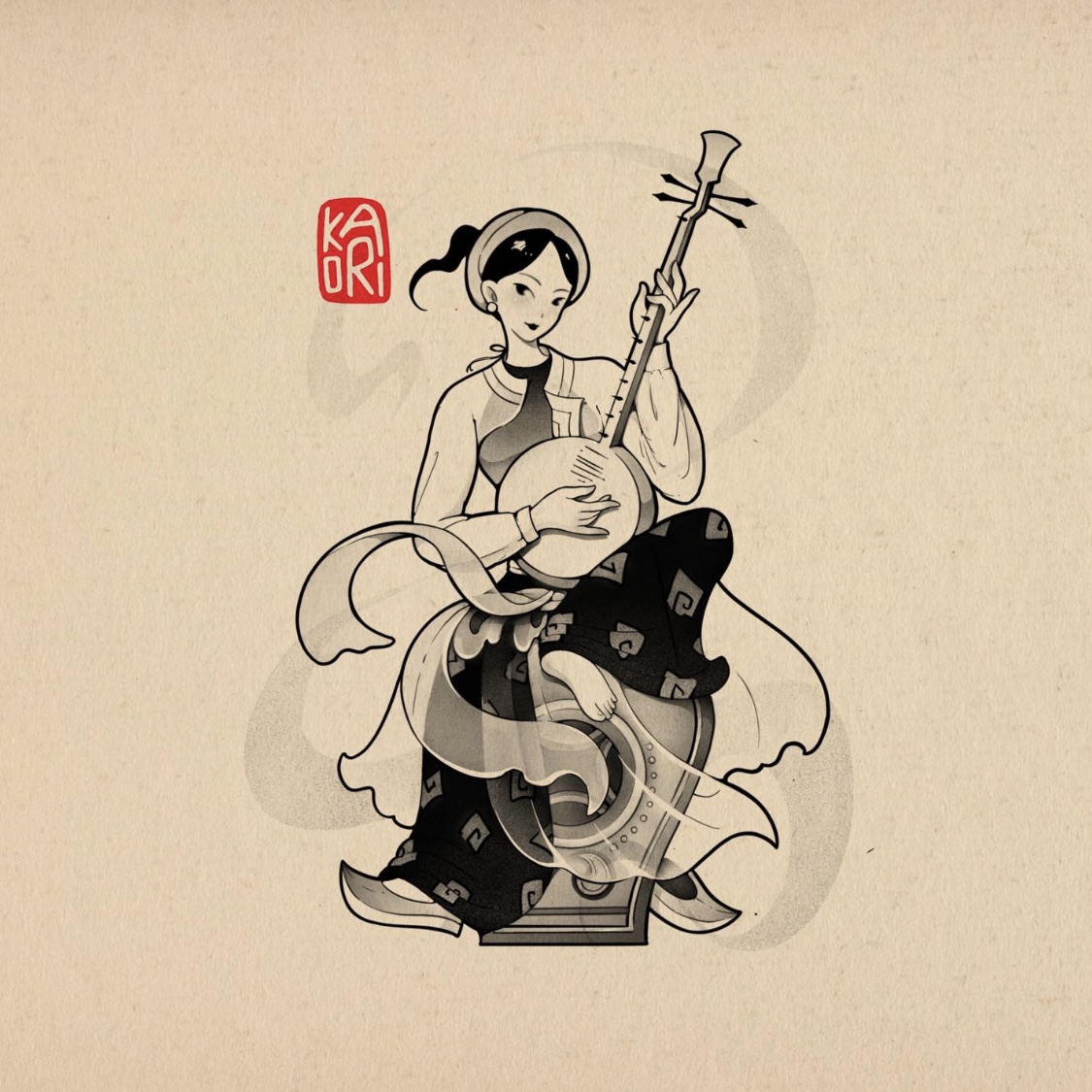
Tố Nữ Đồ is a series of four paintings (Tứ Bình) depicting four traditional Vietnamese women. They are dressed in áo ngũ thân (five-panel traditional robes) from the Nguyễn Dynasty, with their hair styled in the characteristic "rooster-tail" bun (vấn tóc đuôi gà). Each woman is captured in a distinct pose: one playing the flute, one holding sênh tiền (percussion clappers), one holding a fan, and one playing the đàn nguyệt (moon lute). Each figure radiates a unique beauty, embodying the soul of Vietnamese women in the old days. Each painting is accompanied by a four-line, seven-syllable poem (thất ngôn tứ tuyệt) written in Hán characters.
There is a variant of this series featuring a woman playing the flute, one playing the địu nhị (two-string fiddle), one playing the đàn tỳ bà (pear-shaped lute), and one playing the đàn nguyệt. Some researchers hypothesize that this variant belongs to the Đông Hồ school of painting (as documented by the École française d'Extrême-Orient - EFEO). Another variation depicts women in different traditional attire wearing the khăn mỏ quạ (crow’s beak headscarf) and áo tứ thân (four-panel dress) carrying objects such as a musical instrument, a fan, a nón quai thao (flat palm hat), or a betel nut tray.
The accompanying poem, often associated with these paintings, reflects a contemplative and slightly melancholic tone:
How old are you, dear maiden?
Both you and your sister are so lovely,
Like two perfect images on a blank sheet of paper,
Eternal youth captured for a thousand years.
How could I dare to seek a fleeting romance?
A willow’s life is destined to be fragile,
Yet why is that joy not painted upon the canvas?
I blame the artist for being so indifferent.
This series is deeply infused with Vietnamese cultural identity and remains one of the most iconic subjects of the Hàng Trống folk painting genre.